
Is a Healthy Divorce beneficial for children?
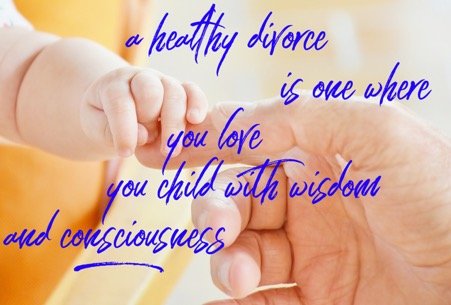
The answer of course is an overwhelming YES, absolutely – a healthy divorce is the only way to go.
You may not have wanted to break-up or even separate – and it may be the other person’s decision or maybe they convinced you that a ‘trial separation’ would be good for both of you – like it or not – you’re here and you have kids… so how do you manage not only your own emotional crises but your children’s too?
In case, you’ve been wondering, children – even the youngest experience distress and upset (even if they don’t or can’t verbalise it directly) – all parents have a responsibility to protect and comfort children when their life is changing because of the divorce. We also know that divorce or parents separating is not bad for children per se, rather it is the exposure too and the ongoing arguments and conflict that children struggle with.
A healthy divorce will empower you to deal with any challenging situation, whether it’s moving homes, wanting to relocate with the children or coping with shared parenting arrangements.
Whether your ex and you can discuss parenting matters amicably or whether you’re in court because one of you refuses to respect the other’s role as important or meaningful in the child’s life, a healthy approach to the separation will be invaluable for the children.
Below are some effective, practical and conscious ways to navigate parenting after separation- the point here is that, even if your ex-partner does not practice parenting in this way – you set the example and hopefully, maybe this will rub off on them:
1. Be alert and aware of your child’s emotions – If your child presents as unsettled, complains of headaches or stomach pains or has regressed in their behaviour (such as refusing to eat; go to school or bed wetting) – these are some signs that there may be emotional unease.
2. Be emotionally available to your child – this means being curious and checking in with them. You absolutely do not have to interrogate or force the child to speak– rather you remain emotionally attuned to their needs. You remain open, compassionate and non-judgmental- (even when they may be saying things that trigger your pain).
3. Allow your child to express themselves honestly and fully – they are independent and have the right to share their life with both you and the other parent (and even the other parent’s family and partner). There is nothing worse for a child who feels like he/she is walking on egg-shells each time they visit a parent.
4. Respect your child’s wishes – if they consistently request or refuse something – listen. This is not about you – don’t make it about you or the other parent or even the situation -this is the child’s views, beliefs, aspirations. It is psychologically harmful to quash or diminish or ridicule your child’s wishes.
5. Be responsible in the way you speak about the other parent. Be the bigger or enlightened parent – and know that your child loves you both – it is damaging to a child’s sense of their world and esteem – if they are always told how “bad’ or ‘irresponsible’ or ‘unfair’ the other parent is.
6. Never ask the child any of these questions or variations of these questions – WHY – because they only serve to undermine the relationship between the child and other parent. These questions come from the asking parent’s fear, anger or resentment.:
i. Who does mummy or daddy sleep with at home?
ii. What does mummy, or daddy feed you? Are you left hungry?
iii. Has daddy or mummy paid for your latest school excursion, shoes books etc?
iv. Does mummy or daddy fight with their new partner or ‘friend’?
v. Did you like to go to mummy’s or daddy’s home? Wouldn’t it be better if you just lived with daddy or mummy full time?
vi. Did you miss me?
A Healthy Divorce removes vulnerable and innocent children (all children – even older teenagers) from any conflict between their parents. Even if you and your ex-partner are highly argumentative or bitterly dislike each other – your feelings are yours- there is no place in a healthy divorce to transfer them to the child.
If you want to know more about the benefits of a happy and healthy divorce, then email pamela@healthydivorce.com.au for more information.

Disclaimer: This article is not intended to replace any specific advice from a lawyer, counsellor or any other medical professional. The article is general information only.